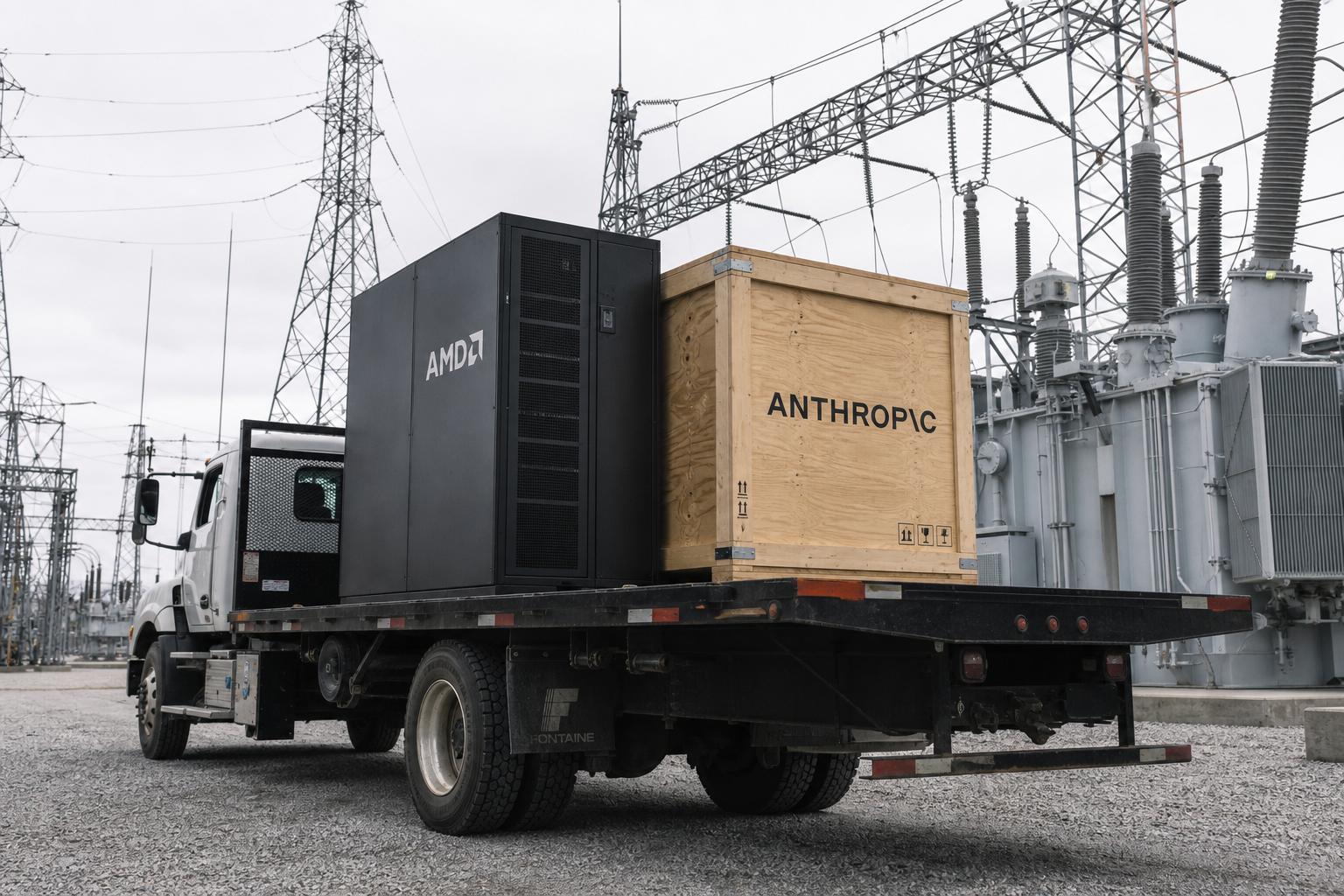
GPUSmith Article
AMD Anthropic Deal: Inside the $5 Billion MI450 Partnership
Inside this article
- 01AMD Anthropic Deal: Inside the $5 Billion MI450 Partnership
- 02Executive Summary
- 03Introduction and Background
- 04The MI450 Platform: Specifications and Positioning
- 05The Deal Structure: Capital, Compute, and Software
- 06Anthropic's Multi-Vendor Compute Strategy
- 07Financial Context: AMD, Nvidia, and Anthropic
- 08Data Analysis and Evidence
- 09Case Studies and Real-World Examples
- 10Implications and Future Directions
- 11Frequently Asked Questions (FAQs)
- 12Conclusion
- 13References
AMD Anthropic Deal: Inside the $5 Billion MI450 Partnership
Executive Summary
On July 22, 2026, Advanced Micro Devices (AMD, NASDAQ: AMD) and Anthropic announced a strategic partnership under which Anthropic will deploy up to 2 gigawatts (GW) of AMD Instinct MI450 Series graphics processing units (GPUs) inside AMD's Helios rack-scale systems, with the first gigawatt of capacity coming online in the first half of 2027 [1]. As part of the same agreement, AMD committed to make a strategic equity investment of up to $5 billion in Anthropic, tied to deployment milestones, marking AMD's first direct capital investment in the AI safety and research company [2] [3]. Reuters characterized the total hardware commitment as worth "tens of billions of dollars" in AI servers, describing the transaction as the latest in a wave of "circular deals" in which chipmakers take equity stakes in the very AI labs that buy their chips [4].
The Instinct MI450 (the flagship configuration is designated MI455X) is AMD's next-generation data center accelerator, built on the CDNA 5 architecture and, according to AMD's own 2025 disclosures, delivering 40 petaflops (PFLOPS) of FP4 compute, 20 PFLOPS of FP8 compute, 432 gigabytes (GB) of HBM4 memory, and 19.6 terabytes per second (TB/s) of memory bandwidth per GPU [5]. AMD says the flagship MI455X delivers roughly 34 times the token throughput of its predecessor, the MI355X [6], and that a full Helios rack produces up to 30% more inference tokens per dollar than the "leading competitive solution," a claim benchmarked internally against Nvidia's Vera Rubin NVL72 rack [6]. Independent analysts caution that these figures are AMD-run benchmarks against unnamed competitive configurations and have not yet been validated by third-party MLPerf results [7].
The deal is the third gigawatt-scale AMD agreement disclosed in roughly ten months, following a 6 GW partnership with OpenAI announced in October 2025 [8] and a 6 GW partnership with Meta Platforms announced in February 2026 [9]. Unlike those two agreements, which paired AMD's chip supply with warrants for up to 160 million shares of AMD stock issued to the customer, the Anthropic deal flows capital in the opposite direction, with AMD investing into Anthropic rather than granting Anthropic an AMD equity stake [3]. A Barclays analyst quoted by Investing.com called this structural shift "a marker to show which direction the puck is moving in a supply-constrained world," arguing that AMD no longer needs to issue warrants to secure large commitments [10].
Anthropic's move diversifies a compute portfolio that already spans Google Cloud TPUs (up to 1 million chips) [11], a further multi-gigawatt Google/Broadcom TPU agreement signed in April 2026 [12], up to 5 GW of new Amazon Trainium and Graviton capacity tied to a $100 billion, ten-year AWS commitment [13], and a $1.25 billion-per-month lease of Nvidia GPU capacity at SpaceX/xAI's Colossus data centers [14]. The AMD deal comes as Anthropic's run-rate revenue climbed from roughly $1 billion at the start of 2025 to more than $47 billion by May 2026 [15], and after the company raised $65 billion in a Series H round at a $965 billion post-money valuation [15].
For AMD, the agreement reinforces a data center business that generated $5.775 billion in the first quarter of 2026, up 57% year over year [16] [17], against an Nvidia data center business that posted $193.7 billion in fiscal 2026 revenue [18], underscoring how far AMD remains from unseating the market leader even as it wins marquee frontier-lab customers. AMD's stock rose approximately 2.4% on the announcement, according to Reuters, before broader tech-sector volatility complicated the intraday picture [4]. Beyond hardware, AMD and Anthropic launched a multi-year engineering collaboration in which Claude will be used to accelerate development of AMD's open-source ROCm software stack, AMD's answer to Nvidia's CUDA platform, which analysts have long identified as AMD's principal competitive weakness [19]. This report examines the deal's structure, the MI450's technical specifications relative to Nvidia's competing Vera Rubin platform, AMD's and Anthropic's respective financial positions, and the implications for the broader AI infrastructure market as of July 2026.
Introduction and Background
The AI industry's compute buildout has produced an unusual dynamic in 2026: the largest AI model developers no longer merely purchase chips, they also receive equity stakes from, or grant equity stakes to, the companies that supply them. The AMD-Anthropic partnership, announced July 22, 2026, fits this pattern precisely. AMD (NASDAQ: AMD) is a Santa Clara, California-based semiconductor company competing against Nvidia in data center graphics processors, and Anthropic is a San Francisco-based artificial intelligence company that develops the Claude family of large language models. Anthropic describes itself as "an AI safety and research company" whose mission centers on building "reliable, interpretable, and steerable AI systems" [20]. The company was founded in early 2021 after Dario Amodei and roughly a dozen researchers, including his sister Daniela Amodei, left OpenAI following disagreements over the direction of that company's AI development, with Amodei and his team building Anthropic around "a thesis that you could build AI systems that were both highly capable and genuinely safe" [21]. Anthropic operates as a Public Benefit Corporation governed in part by a Long-Term Benefit Trust, a structure the company says is designed to keep commercial incentives aligned with its safety mission [20].
Under the terms disclosed by the companies, Anthropic will deploy up to 2 GW of AMD Instinct MI450 Series GPUs, packaged inside AMD's Helios rack-scale systems, with the first gigawatt scheduled for the first half of 2027 [9]. Wccftech, citing AMD's materials, reported the arrangement builds on prior history: "Anthropic has previously been leveraging AMD's Instinct MI355X GPUs" [2], indicating Anthropic was already an AMD customer prior to this announcement. Tom Brown, Anthropic's co-founder and chief compute officer, framed the rationale in hardware-agnostic terms: "Access to compute is central to keeping Claude at the frontier and meeting demand from our customers. By partnering with AMD across the stack, we are securing the capacity we need and optimizing it for training and serving Claude. Running across a diversified range of hardware lets us map the right workloads to the right hardware" [2]. AMD Chair and CEO Lisa Su called the arrangement "a major platform for the next generation of AI infrastructure" and said the two companies had "very much wanted" Anthropic to become "a major part of their infrastructure" [9] [22].
The announcement was made one day before AMD's Advancing AI 2026 developer conference in San Francisco, and was quickly followed by expanded detail at the conference itself, where AMD and Anthropic representatives jointly discussed the multi-year engineering collaboration underpinning the hardware deal. The deal drew immediate coverage from wire services and business press because of its scale and because of what it reveals about the broader AI infrastructure financing landscape: capital is now moving in multiple directions simultaneously among chipmakers, cloud providers, and AI labs, and each new agreement is read by markets as a referendum on both Nvidia's competitive position and the affordability of the current AI buildout. This report proceeds by describing the technical specifications of the MI450 platform, the financial architecture of the deal, its place within Anthropic's broader multi-vendor compute strategy, the market and analyst reaction, and the implications for the AI hardware competitive landscape through the remainder of the decade.
The MI450 Platform: Specifications and Positioning
Technical Specifications
The AMD Instinct MI450 Series is built on AMD's CDNA 5 compute architecture and represents the company's first data center accelerator manufactured on a 2-nanometer (nm) process node. AMD CEO Lisa Su confirmed in an October 2025 interview that "we are very excited about our MI450 generation. It has 2 nm technology, the most advanced fabrication capability" [23]. Reporting citing AMD's internal roadmap indicates the accelerator core die (XCD) uses TSMC's N2P node while the active interposer and media interface dies use the older N3P process, a mixed-node design intended to balance leading-edge compute density against cost and yield [24].
At AMD's November 2025 Financial Analyst Day, the company disclosed baseline performance projections for the MI450: 40 PFLOPS of FP4 (4-bit floating point) compute and 20 PFLOPS of FP8 compute, 432 GB of HBM4 memory operating at 19.6 TB/s of bandwidth, up to 3.6 TB/s of intra-node scale-up bandwidth, and 300 GB/s of inter-node scale-out bandwidth per GPU [5]. These figures represent a substantial generational jump: AMD says the MI450's compute performance roughly doubles that of the prior-generation MI350 series, while memory bandwidth increases by a factor of approximately 2.45 [25]. Memory capacity moves from the 288 GB of HBM3E on the MI350 series to 432 GB of HBM4 on the MI450, a change AMD positions as critical for serving large models and long-context inference workloads that are increasingly memory-bound rather than compute-bound (Source: www.digitalcitizen.life).
The Anthropic deployment specifically uses the MI455X, paired with sixth-generation AMD EPYC "Venice" CPUs, AMD Pensando networking, and the ROCm open software stack, described by Wccftech as running "the latest EPYC Venice CPUs, and Pensando networking solutions, all supported by the ROCm software stack" inside AMD's Helios rack-scale architecture [2]. Wccftech, citing AMD's own materials, separately reported that the MI455X offers "a 10x performance increase over the MI355X" that Anthropic currently uses [2], a figure that differs from AMD's own 34-times generational throughput claim cited above; the discrepancy illustrates how sensitive these vendor-reported multiples are to workload, precision, and configuration assumptions.
MI450 Release Timeline
AMD's public statements contain two distinct MI450 timelines that are frequently conflated in press coverage. At the November 2025 Financial Analyst Day, AMD said Helios systems with MI450 Series GPUs were "expected to deliver rack-scale performance leadership... beginning in the third quarter of 2026" [26]. That general availability timeline aligns with the first tranche of AMD's separate OpenAI agreement, under which "the first 1 gigawatt deployment of AMD Instinct MI450 GPUs is set to begin in the second half of 2026" [8], and with AMD's Meta agreement, which AMD's own materials describe as beginning shipments in the same window [9]. Anthropic's own first-gigawatt timeline, by contrast, is explicitly set for the first half of 2027, roughly two to three quarters behind the OpenAI and Meta ramps [9]. AMD said in May 2026 that it had begun sampling MI450 GPUs to lead customers, with production shipments still targeted for the second half of 2026, and that CEO Lisa Su characterized customer demand as "already stronger than AMD originally expected" (Source: www.digitalcitizen.life).
MI450 versus Nvidia's Competing Platforms
The MI450 competes directly against Nvidia's Vera Rubin platform, unveiled at CES in January 2026 as a six-chip co-designed system comprising the Vera CPU, Rubin GPU, NVLink 6 switch, ConnectX-9 SuperNIC, BlueField-4 DPU, and Spectrum-6 Ethernet switch, all already in production with customer shipments expected in the second half of 2026 [27]. Nvidia CEO Jensen Huang said the Rubin platform is designed to deliver, relative to Blackwell, up to a 10-times reduction in inference token cost [18].
Independent semiconductor analyst Karl Freund attempted a like-for-like comparison of Nvidia Vera Rubin, Google's TPUv7 (Ironwood), and AMD's MI450 and concluded that "AMD maintains a memory capacity advantage in the MI450," while cautioning that Nvidia's headline FP4 performance figures use a mixed-precision methodology (NVFP4) that cannot be directly converted to a comparable metric against AMD's or Google's disclosed numbers [27]. His ultimate assessment was blunt: "most competitors are vying for second place in the data center and physical AI, and... Nvidia's leadership remains largely unchallenged" [27].
At AMD's own Advancing AI 2026 keynote, Lisa Su claimed Helios delivers "an average of 10% to 15% more performance than the competition" on the highest-throughput workloads, translating into the previously cited "up to 30% more tokens per dollar" figure, benchmarked specifically against Nvidia's Vera Rubin NVL72 rack [7]. Analyst Zeus Kerravala, writing for SiliconANGLE, offered a measured critique: "until cloud instance specs, public benchmarks and customer case studies show comparable gains in the wild, Helios is only a strong narrative and a promising design, not yet a proven market-share shift" [7]. A separate digitalcitizen.life comparison, citing AMD's own claims, reported that AMD asserts 1.5 times the memory capacity and 1.5 times the scale-out bandwidth of Vera Rubin, while matching Nvidia on memory bandwidth, FP4 and FP8 compute, and scale-up bandwidth (Source: www.digitalcitizen.life). Taken together, the record suggests genuine hardware competitiveness on paper, paired with an absence of independently audited benchmarks that would let buyers verify either company's claims.
Table 1 below summarizes the disclosed specifications for AMD's Instinct MI450 (MI455X configuration) against Nvidia's competing Rubin GPU, as reported in vendor and independent sources gathered for this report.
| Specification | AMD Instinct MI450 / MI455X | Nvidia Rubin (Vera Rubin platform) |
|---|---|---|
| Architecture | CDNA 5, TSMC 2nm (XCD) / 3nm (interposer, media dies) [24] | Part of a co-designed 6-chip platform (Vera CPU, Rubin GPU, NVLink 6, ConnectX-9, BlueField-4, Spectrum-6) [27] |
| FP4 compute | 40 PFLOPS (projected, per AMD) [5] | Reported at rough parity per AMD's own comparison; precise figures not independently disclosed on a directly comparable basis (Source: www.digitalcitizen.life) |
| Memory capacity | 432 GB HBM4 [5] | Approximately 1.5x less than MI450, per AMD's comparative claim (Source: www.digitalcitizen.life) |
| Memory bandwidth | 19.6 TB/s [5] | Reported at rough parity per AMD's claim (Source: www.digitalcitizen.life) |
| Scale-up bandwidth | Up to 3.6 TB/s [5] | NVLink 6 delivers 3.6 TB/s per GPU scale-up fabric [27] |
| Scale-out bandwidth | 300 GB/s [5] | Approximately 1.5x less than MI450, per AMD's claim (Source: www.digitalcitizen.life) |
| General availability | 2H 2026 for first customers (OpenAI, Meta) (Source: www.digitalcitizen.life); 1H 2027 for Anthropic's first GW | 2H 2026, all six chips already in production as of January 2026 [27] |
The table illustrates that on paper specifications, the MI450 and Vera Rubin are closely matched, with AMD claiming a memory-capacity and scale-out bandwidth edge and rough parity elsewhere. However, as both Karl Freund and Zeus Kerravala noted, none of these figures have been validated through the MLPerf benchmark suite maintained by MLCommons, and Nvidia's use of a mixed-precision FP4 methodology complicates any attempt at a truly apples-to-apples comparison [27]. Buyers evaluating either platform are, in effect, relying on vendor-disclosed figures until independent benchmarking catches up with the hardware release cycle.
The Deal Structure: Capital, Compute, and Software
Financial Architecture
The AMD-Anthropic agreement has two financial components that are contractually linked but structurally distinct. First, Anthropic commits to purchase Instinct MI450 Series GPU capacity from AMD at gigawatt scale; second, AMD committed "to a potentially massive equity stake investment of up to $5 billion in Anthropic," with the investment explicitly tied to Anthropic hitting deployment milestones [9]. CNBC characterized this as the chipmaker's "first check into the AI firm" [3], while the Wall Street Journal, in reporting picked up by Yahoo Finance, described the terms as "AMD will also invest up to $5 billion in Anthropic, its first check into the AI firm, as certain deployment milestones are met" [22].
Reuters put the underlying hardware value at "tens of billions of dollars" and noted that AMD executives have said that 1 GW of computing power, roughly enough electricity for 750,000 U.S. homes, "can cost double-digit billions of dollars," implying the full 2 GW commitment could represent tens of billions in server hardware spending over the life of the agreement [4]. Reuters also placed the transaction within a wider pattern it labeled "circular deals," observing that "Nvidia has been in talks to invest $30 billion in ChatGPT creator OpenAI" around the same period, a comparison intended to situate the AMD-Anthropic structure within an industry-wide trend of chipmakers taking financial stakes in their largest customers [4].
No Warrant, Unlike OpenAI and Meta
A structural detail distinguishes the Anthropic agreement from AMD's two other gigawatt-scale partnerships. In the OpenAI deal, AMD "issued OpenAI a warrant for up to 160 million shares of AMD common stock, structured to vest as specific milestones are achieved," equivalent to roughly 10% of AMD [8] [3]. AMD structured a similar mechanism with Meta, issuing "a performance-based warrant for up to 160 million shares of AMD common stock, structured to vest as specific milestones associated with Instinct GPU shipments are achieved" [28]. The Anthropic deal contains no such warrant; instead, capital flows from AMD to Anthropic.
Barclays analyst Tom O'Malley flagged this reversal as economically significant, writing in a note to clients that "today's announcement shows that equity is no longer on the table for LT [long-term] chip agreements and is a marker to show which direction the puck is moving in a supply-constrained world. This should manifest in more chip-friendly deals in the future and gives us further confidence on an end to financial incentives" [10]. O'Malley additionally noted that dollar-per-gigawatt pricing across the industry appears to be "creeping higher than the ~$15 billion per GW seen in earlier deals as CPU intensity accelerates," and pointed to AMD's server CPU total addressable market estimate "inching toward $200 billion" [10]. This pricing benchmark gives readers a rough order-of-magnitude for what Anthropic's 2 GW commitment could represent in total contract value, though neither company has disclosed an explicit dollar figure for the hardware purchase itself.
The ROCm and Claude Engineering Collaboration
Beyond hardware and capital, the partnership includes a software dimension that several analysts consider more consequential than the chip volumes involved. AMD's press release states that "the companies will collaborate to use Claude to optimize workloads for AMD Instinct GPUs and accelerate AMD ROCm development, and AMD will broadly adopt Claude across its engineering and product development teams" [1]. ROCm (Radeon Open Compute) is AMD's open-source software platform for GPU programming, analogous to Nvidia's proprietary CUDA (Compute Unified Device Architecture). TheNextWeb's analysis argued that "the engineering collaboration may matter more than the hardware," explaining that "ROCm is AMD's answer to Nvidia's CUDA, and its software gap has been the primary reason AI developers default to Nvidia hardware even when AMD's specs are competitive. If Claude can materially improve ROCm's developer experience, AMD addresses the problem that has held it back for years, using its customer's AI to fix its own software" [19].
At Advancing AI 2026, AMD introduced ROCm.ai, described as "an AI-driven development platform that helps developers build, optimize and deploy GPU software faster across AMD platforms," which "brings AI-assisted GPU programming to developers by enabling popular coding agents such as Claude, Codex and Cursor to understand AMD platforms and ROCm natively" [6]. AMD's Vamsi Boppana described a complementary optimization layer called "Hyperloom" that can "analyze the workload, tune configurations, select and tune kernels, adjust parallelism strategies and iterate towards performance goals," saying AMD had already run "a suite of 14,000 models through Hyperloom" and cited a live demonstration in which an AI agent identified a kernel optimization that improved tokens-per-second by 38% on MI355 GPUs running the MiniMax M3 model [7]. Kerravala's assessment was that "AMD's competitive bet is that an open stack plus AI-assisted optimization can close the software-ecosystem gap with Nvidia faster than traditional hand-tuning ever could," while cautioning that "this is still early-stage technology" requiring "safe, reproducible and debuggable" automatic code generation before it can be trusted at production scale [7].
Anthropic's Multi-Vendor Compute Strategy
Why Diversification Matters to Anthropic
The AMD deal cannot be understood in isolation from Anthropic's broader compute posture, which the company describes as deliberately diversified across chip architectures. As Tom Brown put it, "running across a diversified range of hardware lets us map the right workloads to the right hardware" [2]. Anthropic's own April 2026 announcement of its Google/Broadcom TPU expansion put it similarly: "We train and run Claude on a range of AI hardware, AWS Trainium, Google TPUs, and NVIDIA GPUs, which means we can match workloads to the chips best suited for them. This diversity of platforms translates to better performance and greater resilience for customers who depend on Claude for critical work" [12].
By April 2026, Anthropic disclosed that "growth at this pace places an inevitable strain on our infrastructure; our unprecedented consumer growth, in particular, has impacted reliability and performance for free, Pro, Max, and Team users, especially during peak hours" [13]. This admission of capacity strain contextualizes the aggressive pace of Anthropic's 2026 compute dealmaking, of which the AMD partnership is the most recent example.
The Existing Compute Portfolio
Anthropic's compute relationships now span essentially every major chip architecture available at scale. On the TPU side, Anthropic announced in October 2025 that it would expand access "to up to one million TPU chips," representing "the largest expansion of Anthropic's TPU usage to date" and providing "well over a gigawatt of capacity coming online in 2026" [11]. This was followed in April 2026 by an additional agreement with Google and Broadcom "for multiple gigawatts of next-generation TPU capacity that we expect to come online starting in 2027" [12].
On the Amazon side, Anthropic's April 2026 agreement secured "up to 5 gigawatts (GW) of capacity for training and deploying Claude, including new Trainium2 capacity coming online in the first half of this year and nearly 1GW total of Trainium2 and Trainium3 capacity coming online by the end of 2026," backed by a commitment of "more than $100 billion over the next ten years to AWS technologies" [13]. Anthropic already uses "over one million Trainium2 chips" as part of the Project Rainier compute cluster it built jointly with Amazon [13]. Amazon has separately invested $5 billion in Anthropic as part of the April 2026 agreement, with "up to an additional $20 billion in the future," building on $8 billion in prior Amazon investment [13].
On the Nvidia side, Anthropic's compute now includes access to more than 220,000 Nvidia GPUs through a May 2026 deal with SpaceX (whose AI infrastructure work is closely tied to Elon Musk's xAI, following a 2026 corporate merger of the two entities) to use the full capacity of the Colossus 1 data center in Memphis, Tennessee, plus additional Colossus 2 capacity [29]. Anthropic will pay $1.25 billion per month through May 2029 under that agreement, a total that could exceed $40 billion over its term [14] [30]. CNBC reported this arrangement as an especially striking development given that Elon Musk, whose xAI competes directly with Anthropic, had months earlier written on social media that "Anthropic hates Western Civilization" before reversing his public stance after meeting with Anthropic's team [31]. CNBC also reported that Anthropic was, as of the AMD announcement, "in preliminary talks to lease computing power from Meta" [3], and Reuters separately reported a potential Meta-Anthropic compute lease "worth up to $10 billion over two years" [4].
Table 2 below consolidates Anthropic's major disclosed compute and capital commitments as of July 2026, illustrating the scale and multi-vendor character of its infrastructure strategy.
| Partner | Compute Commitment | Capital Commitment | Timeline |
|---|---|---|---|
| AMD | Up to 2 GW of Instinct MI450 Series GPUs in Helios racks [2] | AMD invests up to $5 billion in Anthropic [1] | First GW: 1H 2027 [9] |
| Amazon / AWS | Up to 5 GW of Trainium2/3/4 and Graviton capacity [13] | $100B+ over 10 years to AWS; Amazon invests $5B now, up to $20B more [13] | Near-1GW by end of 2026 [13] |
| Google / Broadcom | Up to 1 million TPUs plus multiple additional GW of next-gen TPU capacity [11] [12] | Value described as "tens of billions of dollars" [11] | Well over 1GW in 2026; new tranche from 2027 [11] [12] |
| SpaceX / xAI | Full capacity of Colossus 1 (300+ MW) plus Colossus 2 access, 220,000+ Nvidia GPUs [31] [29] | $1.25B/month through May 2029 (potentially $40B+ total) [14] [30] | Ongoing through May 2029 [14] |
As the table shows, disclosures identify a commitment of more than $100 billion to AWS over ten years and describe the Google TPU expansion as worth tens of billions of dollars. Because comparable values are not disclosed for every arrangement, the available information does not support a reliable aggregate across the four ecosystems.
Financial Context: AMD, Nvidia, and Anthropic
Anthropic's Growth Trajectory
Anthropic's revenue growth over the eighteen months preceding the AMD deal has been extraordinary by any historical technology company standard. The company's Series F announcement in September 2025 disclosed that "at the beginning of 2025, less than two years after launch, Anthropic's run-rate revenue had grown to approximately $1 billion," and that "by August 2025, just eight months later, our run-rate revenue reached over $5 billion" [32], at a post-money valuation of $183 billion [33]. By April 2026, Anthropic's Google/Broadcom announcement stated that "our run-rate revenue has now surpassed $30 billion, up from approximately $9 billion at the end of 2025" [12]. By the Series H announcement in May 2026, "our run-rate revenue crossed $47 billion earlier this month" [15], and the company's post-money valuation had risen to $965 billion after a $65 billion raise [15]. Reuters reported this valuation "puts Anthropic ahead of OpenAI, last valued at $852 billion post-money in March," underscoring how the two leading frontier labs' private valuations have converged and crossed within months of each other [34]. This progression, from roughly $1 billion in annualized revenue at the start of 2025 to $47 billion sixteen months later, illustrates why Anthropic has needed to sign compute agreements measured in gigawatts rather than megawatts. The company also disclosed in July 2026 that it had confidentially filed IPO paperwork with the U.S. Securities and Exchange Commission, a step CNBC reported as preparation for "a potentially massive IPO that could land as soon as this year" [3].
AMD's Data Center Business
AMD's own financial results provide the backdrop against which the Anthropic deal should be assessed. In the first quarter of 2026 (three months ended March 28, 2026), AMD reported total net revenue of $10.253 billion, up 37.8% year over year, with Data Center segment revenue of $5.775 billion, up 57.2% year over year [16]. Independent research firm Futurum Group corroborated the segment result independently, reporting "Revenue was $10.3 billion, up 38% year-on-year (YoY)... Data Center segment revenue was $5.8 billion, up 57% YoY" [17]. Non-GAAP diluted earnings per share reached $1.37, up 42.7% year over year, and AMD guided second-quarter 2026 revenue to approximately $11.2 billion, plus or minus $0.3 billion [16]. CEO Lisa Su said the results were "driven by accelerating demand for AI infrastructure, with Data Center now the primary driver of our revenue and earnings growth" [16].
At its Financial Analyst Day in November 2025, AMD projected the total addressable market for AI data center compute would reach $1 trillion by 2030 and set a long-term target of "greater than 35% revenue compound annual growth rate (CAGR)," "non-GAAP earnings per share exceeding $20," and "greater than 80%" revenue CAGR specifically for data center AI [26]. Reuters reported the same event, quoting CFO Jean Hu's statement that "in the next three to five years, AMD expects 35% growth across its entire business each year and 60% in its data center business" [35]. By July 2026, at Advancing AI, AMD raised its addressable market estimate further, stating that "AI is accelerating demand for the full range of AMD silicon spanning data center, PCs, edge and embedded processors, driving AMD's TAM to ~$2 trillion in 2030," a figure that reflects an expanded market definition covering the full compute stack rather than data center AI alone [6].
Nvidia's Continued Dominance
Even as AMD accumulates gigawatt-scale customer commitments, Nvidia's absolute scale in AI data center revenue dwarfs AMD's. Nvidia reported record fiscal 2026 (ended January 25, 2026) total revenue of $215.9 billion, up 65% year over year, with fiscal 2026 Data Center revenue of $193.7 billion, up 68% [18]. Fourth-quarter Data Center revenue alone was $62.3 billion, and full-year GAAP earnings per diluted share reached $4.90 [18]. By comparison, AMD's entire Data Center segment revenue for a single quarter, $5.775 billion, is less than 10% of Nvidia's quarterly Data Center revenue of $62.3 billion [18]. Nvidia CEO Jensen Huang framed the company's competitive position bluntly on the earnings call: "computing demand is growing exponentially... Grace Blackwell with NVLink is the king of inference today... and Vera Rubin will extend that leadership even further" [18].
Market and Stock Reaction
Investor reaction to the AMD-Anthropic announcement was mixed and shaped by broader market conditions on the day. Reuters reported that "shares of the Santa Clara, California-based company rose 2.4%," noting that "the stock has more than doubled in value so far this year" [4]. A separate Investing.com report (republished via Yahoo Finance) described a more volatile intraday session, noting that "shares of AMD rose 2% midday as tech stocks rebounded, reversing earlier weakness ahead of the opening bell" amid a broader technology sector slump [10]. Emarketer analyst Jacob Bourne, quoted by Reuters, offered a longer-term framing: "it's strategically significant, as each win deepens AMD's credibility as the number-two to Nvidia and supports the slow, steady share gains underpinning its AI growth story" [4]. Reuters additionally noted Barclays analyst O'Malley's observation that AMD's stock reaction was somewhat volatile in part because "a customer expansion wasn't expected ahead of tomorrow's Analyst Day," referring to AMD's Advancing AI 2026 event the following day [10].
Data Analysis and Evidence
This section consolidates the quantitative record established across AMD's, Anthropic's, and Nvidia's own disclosures, alongside independent market data, to give readers a single point of reference for the scale of the deal and its surrounding context.
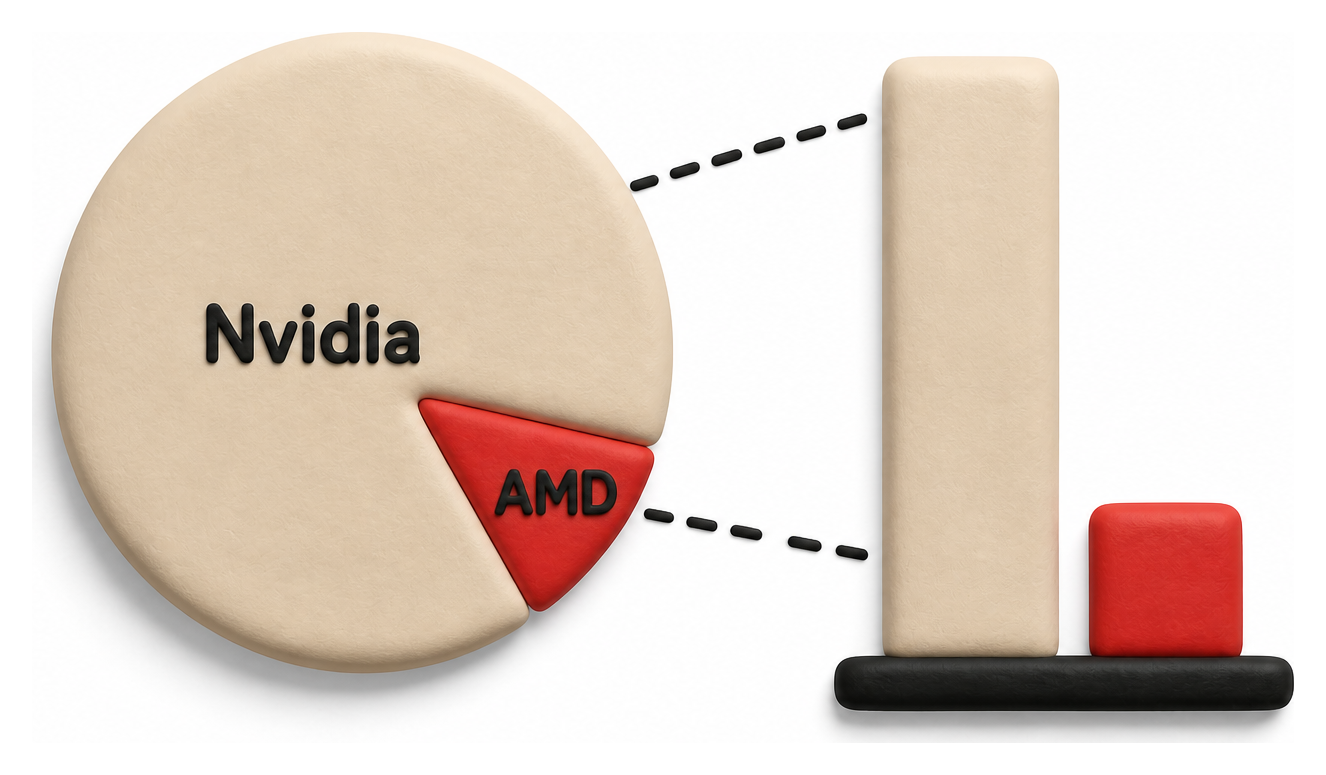
On the AI accelerator market structure, an industry analysis by Silicon Analysts, synthesizing Bloomberg Intelligence and IDC data alongside company filings, estimated Nvidia's data center revenue share at approximately 80% in 2026, with AMD holding an estimated 5% to 7% share of the AI accelerator market by revenue [36]. While this specific market-share percentage synthesizes third-party estimates rather than a single regulatory or company-disclosed figure, the underlying revenue numbers it cites, Nvidia's $193.7 billion FY2026 Data Center revenue, are independently confirmed by Nvidia's own SEC filings and press releases as documented above [18]. AMD's own guidance, meanwhile, projects a "greater than 80%" data center AI revenue CAGR against a fiscal 2025 base, implying rapid relative growth from a small absolute base [26].
The scale of gigawatt-denominated AI infrastructure deals disclosed by AMD alone in the ten months preceding the Anthropic announcement totals 14 GW: 6 GW with OpenAI (October 2025) [8], 6 GW with Meta (February 2026) [37], and 2 GW with Anthropic (July 2026) [2]. Using Barclays' benchmark of roughly $15 billion per GW for earlier-generation deals [10], these three deals alone could represent well over $200 billion in cumulative potential AMD hardware revenue over their multi-year terms, though actual realized revenue depends on customers exercising their full contracted capacity, which is not guaranteed and, in AMD's own words, remains subject to "uncertainties involving the ordering and shipment of AMD's products" [1].
Anthropic's own growth curve is one of the fastest-scaling revenue trajectories publicly documented in the technology sector: run-rate revenue moved from approximately $1 billion at the start of 2025, to over $5 billion by August 2025 [32], to approximately $9 billion by the end of 2025 [12], to over $30 billion by April 2026 [12], to over $47 billion by May 2026 [15], a roughly 47-fold increase in sixteen months. This growth trajectory, more than any single technical specification of the MI450, is the underlying driver of Anthropic's compute-purchasing urgency across every vendor relationship examined in this report, and it explains why the company disclosed in April 2026 that customers spending over $1 million annually on Claude had grown from over 500 to over 1,000 "in less than two months" [12].
Case Studies and Real-World Examples
AMD and OpenAI: The 6 GW Precedent
AMD's October 2025 agreement with OpenAI established the template for its subsequent gigawatt-scale AI partnerships. Under the deal, "OpenAI will work with AMD as a core strategic compute partner to drive large-scale deployments of AMD technology starting with the AMD Instinct MI450 series and rack-scale AI solutions and extending to future generations" [8]. At Advancing AI 2026, SiliconANGLE reported that OpenAI's infrastructure lead described AMD and OpenAI engineers "working side by side to optimize the software stack" and said the company expected to deploy Helios "at massive scale, starting towards the end of this year, and then accelerating toward 2027" [7]. This case demonstrates that AMD's frontier-lab customer relationships extend beyond raw hardware sales into shared engineering resources, a pattern repeated in the Anthropic agreement's ROCm collaboration.
AMD and Meta: Custom Silicon at Gigawatt Scale
AMD's February 2026 agreement with Meta Platforms deployed a different structural variant: rather than standard MI450 GPUs, Meta will receive "a custom AMD Instinct GPU based on the MI450 architecture" co-engineered with Meta, described by industry analysis as "a custom MI450-based GPU co-engineered with Meta for inference workloads" [37]. Meta CEO Mark Zuckerberg framed the deal in terms of workload diversification rather than a shift away from Nvidia: "we're excited to form a long-term partnership with AMD to deploy efficient inference compute and deliver personal superintelligence. This is an important step for Meta as we diversify our compute. I expect AMD to be an important partner for many years to come" [28]. This deal also carried a 160 million share performance-based warrant identical in structure to OpenAI's, tying vesting to shipment milestones and AMD share-price thresholds [28]. By July 2026, AMD reported "Meta is now validating 6th Gen EPYC CPU platforms in its labs and has begun testing and validating workloads on AMD Helios racks as they prepare to deploy at scale," indicating the deal had moved from signature to active technical integration within five months [6].
Anthropic and SpaceX/xAI: Compute From a Rival's Infrastructure
Perhaps the most unusual precedent for Anthropic's diversification strategy is its May 2026 agreement to lease the entire compute capacity of SpaceX's Colossus 1 data center, a facility owned by a company whose AI subsidiary, xAI, directly competes with Anthropic's Claude products. CNBC reported that Anthropic would gain "access to more than 300 megawatts of compute capacity" and had "'expressed interest' in working with SpaceX to develop multiple gigawatts of compute capacity in space" [31]. The deal's political backdrop was unusually public: CNBC noted that the arrangement followed the U.S. Pentagon declaring Anthropic "a supply chain risk" and blacklisting it from military work in March 2026, a decision Anthropic contested by suing the Trump administration in federal court, litigation the outlet reported was "ongoing" as of the SpaceX deal's announcement [31]. This case illustrates that in the current AI infrastructure market, compute scarcity can override competitive and even political friction between counterparties, a dynamic that also frames why Anthropic pursued a fourth major hardware relationship with AMD rather than concentrating exclusively on its existing Google, Amazon, and Nvidia-based supply lines.
AMD's Financial Analyst Day: Setting the Stage
AMD's November 2025 Financial Analyst Day, held three months before the Meta deal and roughly eight months before the Anthropic deal, is a useful case study in how AMD's public financial narrative evolved to match its subsequent customer wins. At the event, AMD CFO Jean Hu said the company expected "35% growth across its entire business each year and 60% in its data center business" over the next three to five years [35], while Su projected the AI data center TAM would reach $1 trillion by 2030 [35]. Eight months and three gigawatt-scale customer wins later, the trajectory these targets implied had, at least directionally, begun to materialize in AMD's reported results, though the ultimate multi-year targets remain forward-looking and unrealized as of this report's publication date.
Implications and Future Directions
The AMD-Anthropic partnership carries several implications for how the AI infrastructure market is likely to evolve through the remainder of the decade. First, the deal reinforces a trend toward multi-vendor compute strategies among frontier AI labs. Anthropic's decision to add AMD as a fourth major silicon partner, alongside Google TPUs, Amazon Trainium, and Nvidia GPUs, suggests that even well-capitalized AI labs increasingly view single-vendor dependency as a supply-chain risk rather than an efficiency advantage. If this pattern holds across the industry, it could gradually erode the network effects that have historically reinforced Nvidia's CUDA ecosystem, particularly if AMD's ROCm.ai and Hyperloom initiatives succeed in narrowing the software usability gap that analysts consistently identify as AMD's primary weakness [19].
Second, the shift away from equity warrants toward direct chipmaker investment, as Barclays analyst Tom O'Malley observed, may signal that AMD believes its negotiating position has strengthened enough that it no longer needs to dilute its own shareholders to win frontier-lab commitments [10]. If this pattern persists across future deals, it would represent a meaningful shift in the balance of negotiating leverage between chip suppliers and AI labs, potentially reducing shareholder dilution risk for AMD investors relative to the OpenAI and Meta precedents. Conversely, if AMD's Anthropic investment proves difficult to monetize, or if Anthropic's IPO valuation diverges sharply from its private-market $965 billion mark, the arrangement could expose AMD to the same "circular deal" scrutiny that Reuters flagged in its coverage, wherein critics worry that vendor financing artificially inflates both parties' reported growth [4].
Third, the widening gap between AMD's roughly $5.8 billion in quarterly Data Center revenue and Nvidia's $62.3 billion suggests that even successful execution of the Anthropic, OpenAI, and Meta agreements will not, in the near term, close AMD's absolute revenue gap with Nvidia [17] [18]. Independent analyst Karl Freund's assessment that "Nvidia's leadership remains largely unchallenged" reflects this reality: winning marquee customer logos is necessary but not sufficient for AMD to meaningfully alter the AI accelerator market's structure in the short term [27]. AMD's own trajectory, if its 80%-plus data center AI CAGR target materializes, would still leave the company well behind Nvidia in absolute dollar terms by 2030, even as its relative market share improves. The key variable to watch is whether independent MLPerf benchmarking of the MI450 and Vera Rubin platforms, expected as both ship at scale in the second half of 2026, validates or undermines the vendor-supplied performance claims each company has published to date. Until that benchmarking data is public, buyers and investors alike are relying on manufacturer-disclosed figures that neither AMD nor Nvidia has subjected to third-party audit.
Finally, Anthropic's parallel pursuit of an IPO, its confidentially filed SEC prospectus, and its rapidly compounding compute obligations across several vendors raise a longer-term question about the sustainability of the current AI infrastructure financing model. Public disclosures establish more than $100 billion of AWS commitments and identify other large capacity agreements, but they do not disclose enough comparable values to support a reliable aggregate across AMD, Amazon, Google/Broadcom, and SpaceX. Should Anthropic's revenue growth decelerate from its current extraordinary pace (a nearly 47-fold increase in sixteen months), its ability to fund the full scope of its contracted compute capacity would come under scrutiny, as would AMD's up-to-$5 billion equity exposure to Anthropic.
Frequently Asked Questions (FAQs)
What is the AMD Anthropic deal? On July 22, 2026, AMD and Anthropic announced a strategic partnership under which Anthropic will deploy up to 2 gigawatts of AMD Instinct MI450 Series GPUs in AMD Helios rack-scale systems, while AMD committed to invest up to $5 billion in Anthropic tied to deployment milestones [2] [1].
Why is it called a $5 billion dollar deal? The $5 billion figure refers specifically to AMD's committed equity investment into Anthropic, which is separate from and in addition to the tens of billions of dollars in AI server hardware Anthropic is expected to purchase from AMD under the compute agreement [4].
What are the AMD Instinct MI450 specs? The MI450 (MI455X configuration) uses AMD's CDNA 5 architecture on TSMC's 2nm process, with 40 PFLOPS of FP4 compute, 20 PFLOPS of FP8 compute, 432 GB of HBM4 memory, 19.6 TB/s of memory bandwidth, up to 3.6 TB/s of scale-up bandwidth, and 300 GB/s of scale-out bandwidth [5].
When does the AMD Instinct MI450 release? General production shipments were guided to begin in the second half of 2026 for AMD's first customers (OpenAI and Meta) (Source: www.digitalcitizen.life), while Anthropic's specific first-gigawatt deployment is scheduled for the first half of 2027 [9].
How does the MI450 compare to Nvidia's chips? The MI450 competes with Nvidia's Vera Rubin platform. AMD claims advantages in memory capacity and scale-out bandwidth, with rough parity in compute and memory bandwidth, though these figures come from vendor benchmarks that have not been validated by independent MLPerf testing as of July 2026 (Source: www.digitalcitizen.life) [27].
Why did Anthropic sign a deal with AMD instead of relying solely on Nvidia? Anthropic has publicly stated a preference for a diversified, multi-vendor compute strategy, using Google TPUs, Amazon Trainium chips, and Nvidia GPUs, and now AMD Instinct GPUs, "to map the right workloads to the right hardware" and reduce dependency on any single supplier [12].
Does this mean Anthropic is dropping Nvidia? No. Anthropic continues to use Nvidia GPUs extensively, including a large deployment through its SpaceX/xAI compute lease covering more than 220,000 Nvidia processors, and has not disclosed plans to reduce its Nvidia usage [29].
What is Anthropic's compute deal with AMD supposed to accomplish for AMD? Beyond hardware revenue, AMD gains a marquee frontier AI lab as a partner to help develop and stress-test its ROCm software stack, using Claude to accelerate ROCm engineering and to help close the long-standing software usability gap with Nvidia's CUDA [19].
Conclusion
The AMD-Anthropic partnership announced July 22, 2026 represents a significant, if not singularly transformative, milestone in the ongoing competition between AMD and Nvidia for AI accelerator market share. The deal's headline terms, up to 2 gigawatts of Instinct MI450 Series GPU capacity and up to $5 billion in AMD equity investment into Anthropic, make it the third gigawatt-scale AMD partnership disclosed within a ten-month span, following the OpenAI and Meta agreements, and it further diversifies Anthropic's already sprawling multi-vendor compute portfolio spanning Google TPUs, Amazon Trainium chips, Nvidia GPUs leased through SpaceX and other partners, and now AMD Instinct hardware.
The deal's distinguishing structural feature, capital flowing from AMD to Anthropic rather than the warrant-based structure used with OpenAI and Meta, has drawn particular analyst attention as a possible signal that AMD's negotiating leverage in AI infrastructure deals is strengthening. Yet the fundamental competitive picture remains one of scale asymmetry: AMD's quarterly Data Center revenue of roughly $5.8 billion remains a small fraction of Nvidia's $62.3 billion, and independent analysts continue to describe Nvidia's market leadership as "largely unchallenged" even as AMD accumulates credible frontier-lab customers. The MI450's technical specifications appear genuinely competitive with Nvidia's Vera Rubin platform on paper, particularly in memory capacity, but the absence of independent MLPerf benchmarking for either platform means buyers and investors are currently relying on vendor-supplied performance claims that have not been externally validated.
For Anthropic, the AMD deal is best understood as one component of a broader infrastructure strategy necessitated by extraordinary revenue growth, from roughly $1 billion in annualized revenue at the start of 2025 to over $47 billion by May 2026, that has strained its existing compute base and pushed the company to secure capacity across every major chip architecture simultaneously. Whether this multi-vendor approach proves to be a durable competitive advantage or an expensive hedge against supply uncertainty will become clearer as the first gigawatt of Anthropic's AMD deployment comes online in the first half of 2027, alongside the broader wave of MI450 and Vera Rubin shipments expected to reach customers over the following eighteen months.
References
- AMD Investor Relations, "AMD and Anthropic Announce Strategic Partnership to Deploy Up to 2 Gigawatts of AMD Instinct MI450 Series GPUs," July 22, 2026.
- AMD Investor Relations, "AMD and OpenAI Announce Strategic Partnership to Deploy 6 Gigawatts of AMD GPUs," October 6, 2025.
- AMD Investor Relations, "AMD and Meta Announce Expanded Strategic Partnership to Deploy 6 Gigawatts of AMD GPUs," February 24, 2026.
- AMD Investor Relations, "AAI 2026: AMD Delivers Full-Stack Compute for the Agentic AI Era," July 23, 2026.
- AMD Investor Relations, "AMD Reports First Quarter 2026 Financial Results," May 5, 2026.
- AMD Investor Relations, "AMD Unveils Strategy to Lead the $1 Trillion Compute Market and Accelerate Next Phase of Growth," November 11, 2025.
- Futurum Group, "AMD Q1 FY 2026: Data Center Momentum Builds as AI Deployments Scale," May 7, 2026.
- Nvidia Newsroom, "NVIDIA Announces Financial Results for Fourth Quarter and Fiscal 2026," February 25, 2026.
- Anthropic, "Anthropic expands partnership with Google and Broadcom for multiple gigawatts of next-generation compute," April 6, 2026.
- Anthropic, "Anthropic and Amazon expand collaboration for up to 5 gigawatts of new compute," April 20, 2026.
- Anthropic, "Anthropic raises $65B in Series H funding at $965B post-money valuation," May 28, 2026.
- Anthropic, "Anthropic raises $13B Series F at $183B post-money valuation," September 2025.
- Anthropic, "Company," accessed July 2026.
- Reuters, "AMD to sell Anthropic tens of billions in AI servers, invest up to $5 billion in startup," July 22, 2026.
- Reuters, "AMD expects profit to triple by 2030, data center chip market to grow to $1 trillion," November 11, 2025.
- Reuters, "Anthropic's valuation surges to $965 billion, surpassing OpenAI," May 28, 2026.
- CNBC, "AMD to invest up to $5B in Anthropic as part of computing power deal," July 22, 2026.
- CNBC, "Anthropic, SpaceX announce compute deal that includes space development," May 6, 2026.
- Google Cloud Press Corner, "Anthropic to Expand Use of Google Cloud TPUs and Services," October 23, 2025.
- Axios, "Anthropic is paying SpaceX $15 billion per year," May 20, 2026.
- Business Insider, "Anthropic Is Paying SpaceX $1.25 Billion a Month for AI Compute," May 20, 2026.
- SiliconANGLE, "Five thoughts from Lisa Su's keynote at AMD Advancing AI," July 24, 2026.
- Forbes, "Nvidia Leapfrogs Google And AMD With Vera Rubin," January 7, 2026.
- TheNextWeb, "AMD is investing $5 billion in Anthropic and deploying 2 gigawatts of Helios GPUs to run Claude," July 23, 2026.
- Wccftech, "AMD Lands Anthropic In 2GW Instinct MI450 Deal, Backing It With A $5 Billion Equity Bet," July 22, 2026.
- HotHardware, "AMD And Anthropic Strike Huge 2-Gigawatt MI450 Chip Deal And Up To $5B Stake," July 22, 2026.
- HotHardware, "AMD Instinct MI450 Is Coming In 2026 To Challenge NVIDIA's Vera Rubin, MI500 Arrives 2027," November 12, 2025.
- Jon Peddie Research, "AMD and Meta announce $60B, 6 GW AI partnership," February 2026.
- Digitalcitizen.life, "AMD starts sampling MI450 AI GPUs as inference demand grows," May 6, 2026.
- TechPowerUp, "AMD Officially Confirms 2 nm Process for Instinct MI450 Accelerator," October 9, 2025.
- VideoCardz, "AMD CEO confirms Instinct MI450 uses 2nm process technology," October 9, 2025.
- PC Central, "AMD Instinct MI450 GPU Unveiled: CDNA 5 Architecture, 40 PFLOP FP4 Performance," April 24, 2026.
- Yahoo Finance / Investing.com, "AMD rises 2% on blockbuster Anthropic AI deal as broader tech rebound lifts sector," July 22, 2026.
- Yahoo Finance / Wall Street Journal, "AMD and Anthropic Sign Major Chips-and-Investment Deal," July 22, 2026.
- Silicon Analysts, "AMD vs NVIDIA AI GPU Market Share 2026," 2026.
- Crypto Briefing, "Anthropic CEO Dario Amodei discusses departure from OpenAI," June 2026.
External Sources (37)
About
GPUSmith
Plan and build private AI compute with GPU Smith. We connect workload requirements with GPU hardware, networking, deployment and operating decisions so your infrastructure fits the work it must perform.
GPU Smith provides independent engineering and research for private AI infrastructure. We help technical buyers and operators reason about GPU workload sizing, hardware selection, procurement, deployment and inference operations, from the compute system to the networking, power and cooling requirements around it.
Start with the workload
Useful infrastructure decisions begin with the models, data, throughput, latency and operating constraints a team actually has. GPU Smith helps connect those requirements with system design and deployment choices. The goal is a privately controlled AI environment whose capacity and operational demands are understood before a purchasing decision.
Hardware and supplier research
Our public reference library covers GPUs, complete systems and networking components. The server-vendor directory and manufacturing research help teams investigate suppliers, compare options and follow sources behind technical claims. We distinguish manufacturer specifications from measured benchmarks and advertised capabilities from tested configurations. Reference pages are research resources, not a live inventory listing or a binding equipment quote.
Deployment and operations
GPU Smith's engineering scope includes infrastructure integration, networking, power, cooling and the practical operation of inference workloads. Our published articles explain the tradeoffs behind deployment, procurement and ongoing operations so teams can ask better questions and document decisions.
Work with GPU Smith
Explore the hardware library, GPU references, networking references and vendor research. Contact GPU Smith with your workloads and deployment constraints to discuss a project and confirm current scope, pricing and availability.
Inclusion of a manufacturer or product in our research does not imply a partnership, certification or endorsement.
Disclaimer
This document is provided for informational purposes only. No representations or warranties are made regarding the accuracy, completeness, or reliability of its contents. Any use of this information is at your own risk. GPUSmith shall not be liable for any damages arising from the use of this document. This content was generated with assistance from artificial intelligence tools, which may contain errors or inaccuracies. Readers should verify critical information independently. All product names, trademarks, and registered trademarks mentioned are property of their respective owners and are used for identification purposes only. Use of these names does not imply endorsement. This document does not constitute professional or legal advice. For specific guidance related to your needs, please consult qualified professionals.